
Tuesday, 1 October 2013

Monday, 30 September 2013


Top 5 Most Dangerous Dog Breeds Based on Bite Fatalities
1. Pit Bull
 To anyone who knows dogs, the American Pit Bull Terrier is no surprise at #1 on a list of deadliest dogs. In this study the Pit Bull stood far ahead of all the other breeds with 66 fatalities attributed to it. Known for their extremely aggressive nature, many states have legislation banning the breeding of pit bulls.


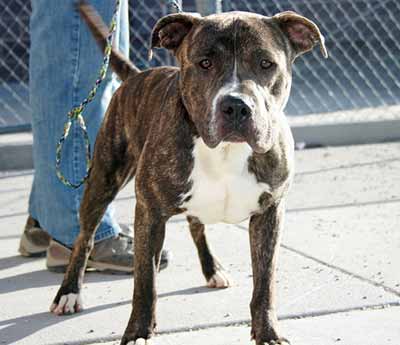
Furthermore they are known to be bred for the highly illegal sport of dog fighting. Therefore, it’s no real surprise that Pit Bulls are known as the #1 deadliest dog based on bite fatalities.
2. Rottweiler
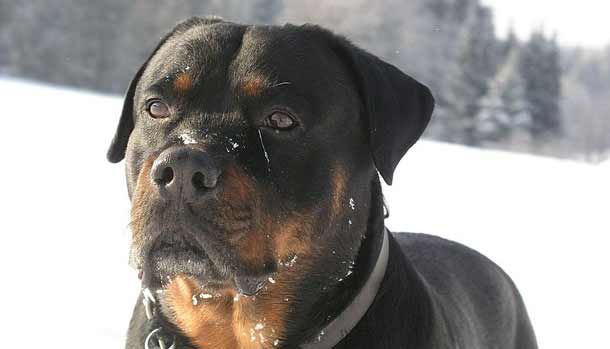
Coming in at #2, the Rottweiler was responsible for 39 fatalities in this study. Another very old breed the Rottweiler is one of the oldest herding breeds in existence. As with most old breeds, their prey drives require much training to dampen.
Adult males have about the same dimensions as the German Shepard, however they are much heavier, with some being able to weigh around 110 pounds (50 kilograms). Their temperament is usually passive and attentive, but are known to be prone to aggressive outburst.
3. German Shepard
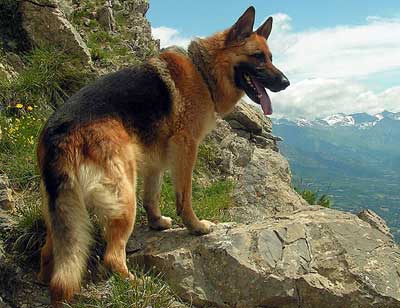
Another commonly recognized dog makes this list. German Shepherds are a fairly new breed of dog, only dating from about 1885, where a society in Germany worked towards creating a perfect breed to protect herds in rural communities. A fully grown adult German Shepard can weigh 82 pounds (38 kilograms) and stand at about 25 inches (62 centimeters), about the same size as a Malamute.
Also like the Doberman, their high intelligence and aggressiveness makes them sure picks as guard and police dogs. With 17 fatalities attributed to them, they are the third most dangerous dog breeds.
4. Husky
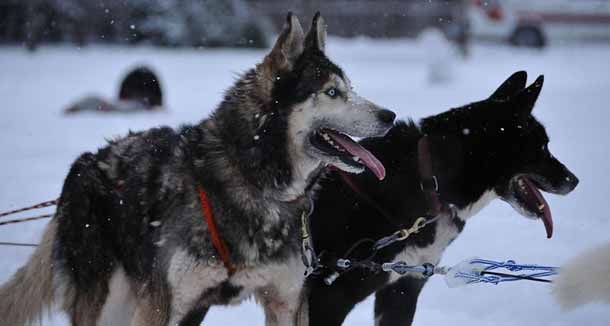
Huskies are one of the oldest breeds of dogs thought to exist in the world. Like their Malamute cousins they are used primarily as sled dogs, and must be constantly active. With a total of 15 fatalities linked to Huskies in the study conducted, they are definitely known to be aggressive, but this has been linked to poor training/obedience issues as Huskies rate as one of the most intelligent canines in the world. Given their close relation to the grey wolf however, they do maintain a somewhat high prey drive.
5. Wolf-Dog Hybrid
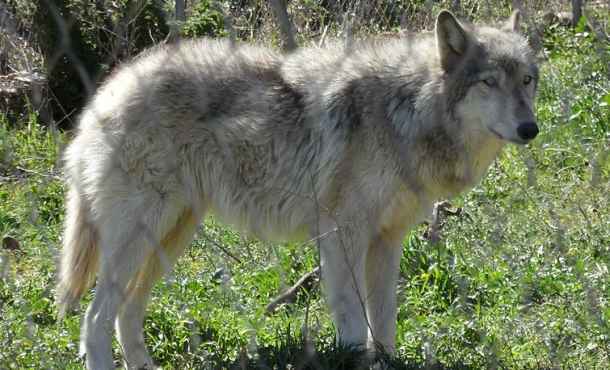
Unsurprisingly Wolf-dog hybrids (Wolf X) are known as the 5th most dangerous breed of dogs. With 14 listed fatalities in this study. Wolves themselves are ancestors of the modern domestic dog, and are known as one of the most dangerous predators in the wild even today. Even with proper crossbreeding, domestication, and training Wolf-dog hybrids maintain much of the prey drive of their wolf genetics making them quite dangerous to keep as pets.
Poodle

Family:
Gun Dog, Companion, Water Dog
Area of origin:
Germany and Central Europe
Original function:
Water retrieving, performer
Average size of male:
Ht: 15-21, Wt: 45-65
Average size of female:
Ht: 15-21, Wt: 45-65
Other names:
Barbone, Caniche
Although the Poodle is most often identified with France, his earliest ancestors were probably curly-coated dogs from central Asia that assisted with herding and followed many routes into various parts of Europe. Interwoven in their ancestry are also several rough-coated water dogs. Perhaps the earliest incarnation of the Poodle was the Barbet, a curly-coated dog distributed in France, Russia, Hungary and elsewhere. He is the German version, however, that exerted most influence on the modern Poodle. In fact, the word Poodle comes from the German word pfudel, meaning 'puddle' or 'to splash', probably reflecting the dog's water abilities. In France, it was known as Caniche or Chien Canard, both referring to its duck-hunting abilities. Thus, from herding and water roots the Poodle became a talented water-hunting companion. The Poodle was also drawn into service as a military dog, guide dog, guard dog, wagon puller for performers and, eventually, as a circus performer. His coat was shorn close to facilitate swimming, but left slightly longer on the chest for warmth in cold water.
Although some believe the puffs of hair around the leg joints and tail tip were for protection when hunting, compelling evidence suggests that they arose as decoration during the Poodle's performing days. The Poodle found favor as an elegant companion for fashionable ladies. He became favored by French aristocracy and eventually became the national dog of France. His characteristic clip was accentuated, and a successful effort was made to perfect the smaller specimens. Poodles entered the show ring in the late 1800s. Some of the early show Poodles were shown in corded coats, in which the hair is allowed to mat in long thin tresses rather than be brushed out. While eye-catching, the upkeep was difficult and the trend died out by the early 1900s, being replaced by the bouffant styles still in vogue. At the same time Poodle popularity in America waned, so that by the late 1920s, Poodles had almost died out in North America. In the 1930s, the breed staged a comeback that eventually placed it as the all-time most popular dog in America.
Golden Retriever
Family:
gundog, retriever
Area of origin:
England
Original function:
retrieving
Average size of male:
Ht: 23-24, Wt: 65-75
Average size of female:
Ht: 21.5-22.5, Wt: 55-65
Other names:
yellow retriever
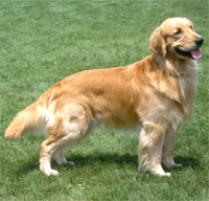
One of the best documented and most fortuitous efforts to produce a breed resulted in the golden retriever. The man responsible for the breed was Lord Tweedmouth, who lived just north of the Scottish border along the Tweed River. With an increasing interest in retrieving dogs in the mid-1800s, a dog that could push through heavy vegetation, brave cold water, swim strongly and retrieve gently was in demand. Lord Tweedmouth bred Nous, a yellow wavy-coated retriever (a descendant of the small Newfoundland and the earlier Labrador breeds used by fisherman) to Belle, a Tweed water spaniel (a popular liver-colored retriever with tightly curled coat). They produced four puppies, which showed promise of being outstanding upland bird dogs.
Subsequent judicious crosses were made with other black retrievers, Tweed spaniels, setters and even a bloodhound. The breed was first considered to be a yellow variety of flat-coated retrievers, but was recognized as a separate breed, the yellow or golden retriever, in 1912. A few of these dogs had come to America by way of Lord Tweedmouth's sons by 1900, but the AKC did not register them as a separate breed until 1927. The breed was valued for the hunting abilities so ably produced by the careful blending of foundation stock. She only later became popular as a pet, show dog and obedience competitor. After she made the transition, however, her rise to the height of popularity was meteoric, and she remains one of the most popular of all breeds in America.
Dalmatian

Family:
Scenthound, Pointer
Area of origin:
Yugoslavia
Original function:
carriage dog
Average size of male:
Ht: 19-23, Wt: 40-60
Average size of female:
Ht: 19-23, Wt: 40-60
Other names:
none
The spotted Dalmatian is the most distinctly patterned breed of any dog, but the origin of his coat pattern is unknown. In fact, although art evidence points to an ancient origin, the time and place of the breed's birth is also unknown. He gets his name from Dalmatia, a region in western Yugoslavia, but probably did not originate there. Their ancestors may have included a small version of the spotted Great Dane or pointers, though this, too, is conjectural. Even the breed's original function is unclear, but that is more likely because of his use in so many roles rather than any lack of employment. These roles included war dog, sentinel, shepherd, draft dog, ratter, retriever, bird dog, trailer and even circus dog. It was as a coach dog in Victorian England, however, that the Dalmatian found his niche.
The coach dog served both a practical and aesthetic role; he protected the horses from marauding dogs and added a touch of style to the procession. The dogs would trot alongside, in front or beneath the axle (considered the most elegant position) of the coach; interestingly, some evidence exists that coaching position may have a hereditary component. With the advent of the automobile, the Dalmatian lost his place in high society, and his popularity declined. He continued as a coach dog for horse-drawn fire engines, and this association led to his adoption as the modern 'fire dog'. His flashy coloration has always ensured that he has been popular as a pet and show dog; however, his feature in popular children's movies has catapulted the breed to one of the most popular breeds in America in the years following the movie releases.
Chihuahua

Family:
companion, Southern (pariah)
Area of origin:
Mexico
Original function:
ceremonial
Average size of male:
Ht: 6-9, Wt: <6
Average size of female:
Ht: 6-9, Wt: <6
Other names:
none
The smallest breed of dog, the Chihuahua has a controversial history. One theory holds that she originated in China and was brought to the New World by Spanish traders, where she was then crossed with small native dogs. The other theory contends that she originated entirely in Central and South America, descending from the native Techichi, a small mute dog that was sometimes sacrificed in Toltec religious rituals. A small red dog was believed to guide the soul to the underworld, and every Aztec family kept such a dog, which was sacrificed and buried with any deceased family member. To make matters worse for the Techichi, the Toltecs and their conquerors, the Aztecs, often ate dogs and the Techichi may have sometimes been on the menu. Despite what may have been short lives,
Techichis apparently were well-cared for during life by the priests or their families. In fact, the most likely origin of the Chihuahua is a combination of these theories: The native Techichi was probably crossed with tiny hairless Chinese dogs, but again the date when this occurred is controversial. The Chinese dogs may have been brought over when a land bridge spanned the Bering Strait, or they may have been brought later by Spanish traders. When Cortes conquered the Aztecs in the 16th century, the little dogs were abandoned and left to fend for themselves. About 300 years later, in 1850, three tiny dogs were found in Chihuahua, Mexico. A few were brought to the United States, but they aroused only moderate attention. Only when Xavier Cugat ("the rhumba king") appeared in public with a Chihuahua as his constant companion did the breed capture the public's hearts. She experienced a meteoric rise in popularity and has continued as one of America's most popular breeds.
Bulldog
Family:
livestock dog, Mountain Dog, Mastiff (Bulldog)
Area of origin:
England
Original function:
bull baiting
Average size of male:
Ht: 12-15, Wt: 50
Average size of female:
Ht: 12-15, Wt: 40
Other names:
English Bulldog
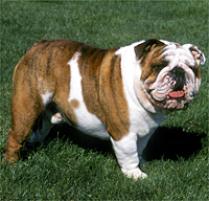
With the most distinctive mug in dogdom, the Bulldog has an equally distinctive history. The Bulldog's origin lies in the cruel sportull-baiting, which originated in England around the 13th century. The dog's purpose was to attack and madden the bull by grabbing it, usually by the nose, and not releasing its grip. Not only was this considered entertainment, but it also was believed that a bull's meat was tastier if the bull was baited before being butchered. Some bulldogs were also set against bears for bearbaitig, purely for entertainment. Bulldog owners set great store by their dog's ferocity and, especially, fortitude in the face of pain, so much so that horrifying stories exist of handlers proving their dog's toughness by demonstrating that it would hang onto the bull despite being tortured or mutilated by the handler. In 1835, bull-baiting was outlawed, and a new phase began for the Bulldog.
Some efforts were made to have the dogs fight one another, but this was clearly not the Bulldog's forte. Now a dog without a cause, the breed's popularity plummeted. By all rights, the breed should have become extinct, except that it had gained so many ardent admirers that they set out to rescue the bulldog by selecting against ferocity while still maintaining and often accentuating his distinctive physical characteristics. So successful were they that the Bulldog became an extremely amiable character, with a personality not at all like its sourmug might suggest. His tough steadfast persona led him to be identified as a national symbol of England. His amiable clownish personality belies his appearance, and the bulldog is a popular pet.
Boxer

Family:
livestock dog, mastiff (bulldog)
Area of origin:
Germany
Original function:
bullbaiting, guardian
Average size of male:
Ht: 22.5-25, Wt: 65-80
Average size of female:
Ht: 21-23.5, Wt: 50-65
Other names:
none
The boxer derives from two central European breeds of dog that no longer exist: the larger Danziger bullenbaiser and the smaller Brabenter bullenbaiser. Bullenbaiser means "bull biter," and these dogs were used to grab large game (wild boars, deer and small bears) after it was at bay, hanging onto it until the hunter arrived to kill it. This required a strong but agile dog with a broad powerful jaw and a recessed nose to enable the dog to breathe while his jaws were clamped onto an animal. Similar attributes were required of dogs used in bull-baiting, a popular sport in many European countries. In England, the bulldog was the favored breed for the sport, whereas in Germany large mastiff-type dogs were used. Around the 1830s, German hunters began a concerted effort to create a new breed, crossing their bullenbaisers with mastiff-type dogs for size, terriers for tenacity and, finally, bulldogs.
The result was a tough agile dog with a streamlined body and strong grip. When bull-baiting was outlawed, the dogs were mostly used as butcher's dogs in Germany, controlling cattle in slaughter yards. By 1895, an entirely new breed, the boxer, had been established. Although the exact origin of the name boxer is obscure, he may have been derived from the German boxl, as they were called in the slaughterhouses. The boxer was one of the first breeds to be employed as a police and military dog in Germany. By 1900, the breed had become established as a general utility dog, a family pet and even a show dog. The AKC recognized the breed soon after, but only in the 1940s did the breed begin his steady rise to the top of the popularity charts, eventually peaking as the fourth-most popular breed in America.
Sunday, 29 September 2013
Bichon Frise
Bichon Frise
Family:
Bichon, companion, water dog
Area of origin:
France
Original function:
companion, performer
Average size of male:
Ht: 9.5-11.5, Wt: 7-12
Average size of female:
Ht: 9.5-11.5, Wt: 7-12
Other names:
Tenerife dog, Bichon Tenerife, Bichon a Poil Frise
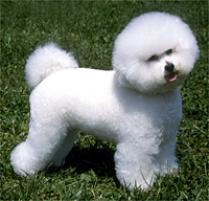
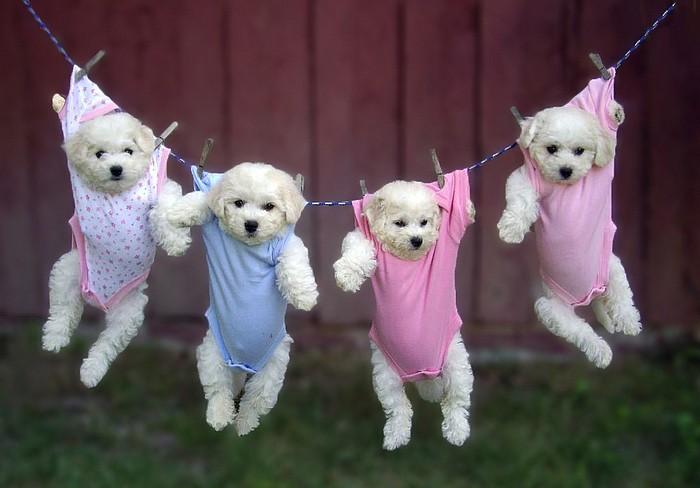
The Bichon Frise has his roots in the Mediterranean, originally produced by crossing the Barbet (a large water dog) with small, white lap dogs. This cross eventually produced a family of dogs known as Barbichons, which was later shortened to Bichons. The Bichons were divided into four types: the Bichon Maltaise, Bolognese, Havanese and Teneriffe. The Teneriffe, which was to later become the Bichon Brise, developed on the Canary Island of Teneriffe, probably having been taken there by Spanish seafarers in ancient times. In the 14th century, Italian sailors brought specimens back from the island to the Continent, where they quickly became favored pets of the upper class. Following a series of French invasions of Italy in the 1500s, the little dogs were adopted by the French. They were special pets of Francis I and his successor, Henry III. They also enjoyed popularity in Spain, but for some reason, the breed's popularity waned throughout Europe.
He did experience a brief resurgence during the reign of Napoleon III in the early 19th century, but once again quickly faded from favor. This began a new chapter in the Bichon's history, as he sank from court favorite to common street dog. The Bichon survived, however, because of his propensity for performing tricks, he teamed with peddlers and organ grinders to entertain passerbys or fair-goers for money. With the advent of World War I, the little dogs were nearly lost. A few dogs were brought back home by soldiers, but no real effort to save the breed was made until a few French breeders began an earnest effort to establish the breed. In 1933, the name officially became Bichon a Poil Frise (Bichon of the curly coat). The breed was threatened once again, this time by World War II, and it was not until he came to America in the 1950s that his future became more secure. Even then, the Bichon Frise did not catch on until he received a new hair cut and greater publicity in the 1960s. The breed suddenly caught the attention of fanciers and was recognized by the AKC in 1971.
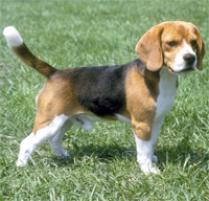
Beagle
Beagle
Family:
Scenthound
Area of origin:
England
Original function:
trailing rabbits
Average size of male:
Ht: 13-15, Wt: 18-30
Average size of female:
Ht: 13-15, Wt: 18-30
Other names
:
English beagle
By the 14th century, hare hunting had become a popular sport in England, and the dogs used were probably of Beagle type. The origin of the name Beagle may be from Old French words meaning open throat in reference to the breed's melodious bay, or from the Celtic, Old English or Old French words for 'small'. The word Beagle was not used until 1475, however, but can then be found frequently in writings from the 16th century on. Hunters could follow these dogs on foot and could even carry one in a pocket if the need arose. By the 1800s, Beagles existed in several sizes, but the smaller 'pocket-size' dogs were particularly popular. These dogs measured only about 9 inches and often needed the hunter's assistance in crossing rough fields. One of the special appeals of the smaller beagles was that the hunt could be followed even by ladies, the aged or the infirm, as they slowly followed the winding path of the hare. The first mention of the Beagle in America was in 1642. Beagles were used in the South prior to the Civil War, but these dogs bore little resemblance to their English counterparts. After the war, English imports formed the basis of the modern American Beagle. By the end of the 19th century, Beagles were popular competitors in both field and conformation exhibitions. But the merry little scenthound did not stop there: He continued to become one of America's all-time favorite breeds, finding his special niche as a family pet.
.jpeg)


Subscribe to:
Comments (Atom)